Corrosion resistance
The anodic layer protects effectively in humid and aggressive environments, preserving part integrity.
 🇲🇽 Español
Address: José María Rotea #3442, Col. Huertas de La Progreso
Mexicali, B.C., México. 📞
Phone:
+52 686 555-9156
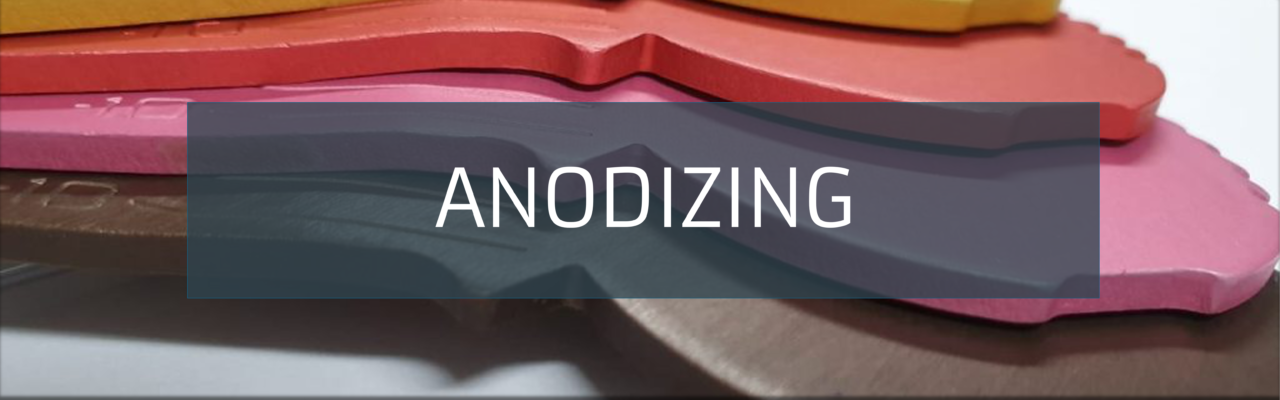
Anodizing converts the surface of aluminum into a film of aluminum oxide (Al₂O₃), known as alumina, through a controlled electrolytic reaction.
The result is a thicker, harder, and more durable layer. It is uniform, adherent, and highly resistant, providing corrosion protection, improving surface hardness, and delivering a homogeneous appearance across the entire surface.
An important property of anodizing is that the alumina layer is dielectric, which means it does not conduct electricity. While the aluminum beneath remains conductive, the anodized surface becomes an electrical insulator. For applications requiring electrical contact, specific areas must be masked prior to anodizing to keep conductive zones.
In this process, alumina forms directly on the part’s surface, becoming a protective barrier that extends service life and enhances performance under demanding conditions.
In addition to the natural aluminum color, the process allows for controlled coloring to meet both aesthetic and functional requirements.
The anodic layer protects effectively in humid and aggressive environments, preserving part integrity.
Increases surface hardness and extends service life against friction and abrasion.
Natural or colored finish with excellent lot-to-lot repeatability.
Alumina is dielectric and improves the adhesion of paints, adhesives, and sealants.

Thin film with excellent compatibility with adhesives and high corrosion resistance. Common in aerospace.
Versatile for decorative and industrial applications. Enables uniform coloring and consistent finishes.
Thicker, harder coating for parts exposed to heavy wear, friction, and severe loads.
This is a finish for aluminum components, with a gray/cobalt-gray appearance produced through the anodizing process without the use of dye or pigment. Final appearance is subject to technical review and may vary depending on aluminum alloy, part geometry, process conditions, and customer requirements.
In addition to a natural finish, PAIMEX offers color application on parts. These finishes can also be carried out through co-development with the customer to create a specific color or finish tailored to your needs. Availability depends on requested requirements as well as part shape and size.
PAIMEX serves the aerospace, automotive, electronics, medical, telecommunications, and commercial sectors, supported by robust quality systems and third-party audits.
The process is designed for aluminum alloys. Compatibility depends on the series and end use—our team can advise based on your part.
It depends on service environment, expected friction, and specification requirements. We’ll recommend the optimal range for your application.
Protection comes mainly from thickness and sealing. Color is selected for aesthetics and functional needs.

PAIMEX is a company that has been operating since 2005 and is dedicated to offering METAL FINISHING services.
We are based in Mexicali, B.C., Mexico, on the border with Calexico, California; 2 hours from San Diego and 4 hours from Los Angeles, California.
📍 Address:
José María Rotea #3442,
Col. Huertas de La Progreso.
Mexicali, B.C., Mexico.
Zip Code: 21190
☎ Phone:
(+52) 686 555-9156
📧 Email:
info@serviciospaimex.com
Scan this QR code to download PAIMEX's contact details.